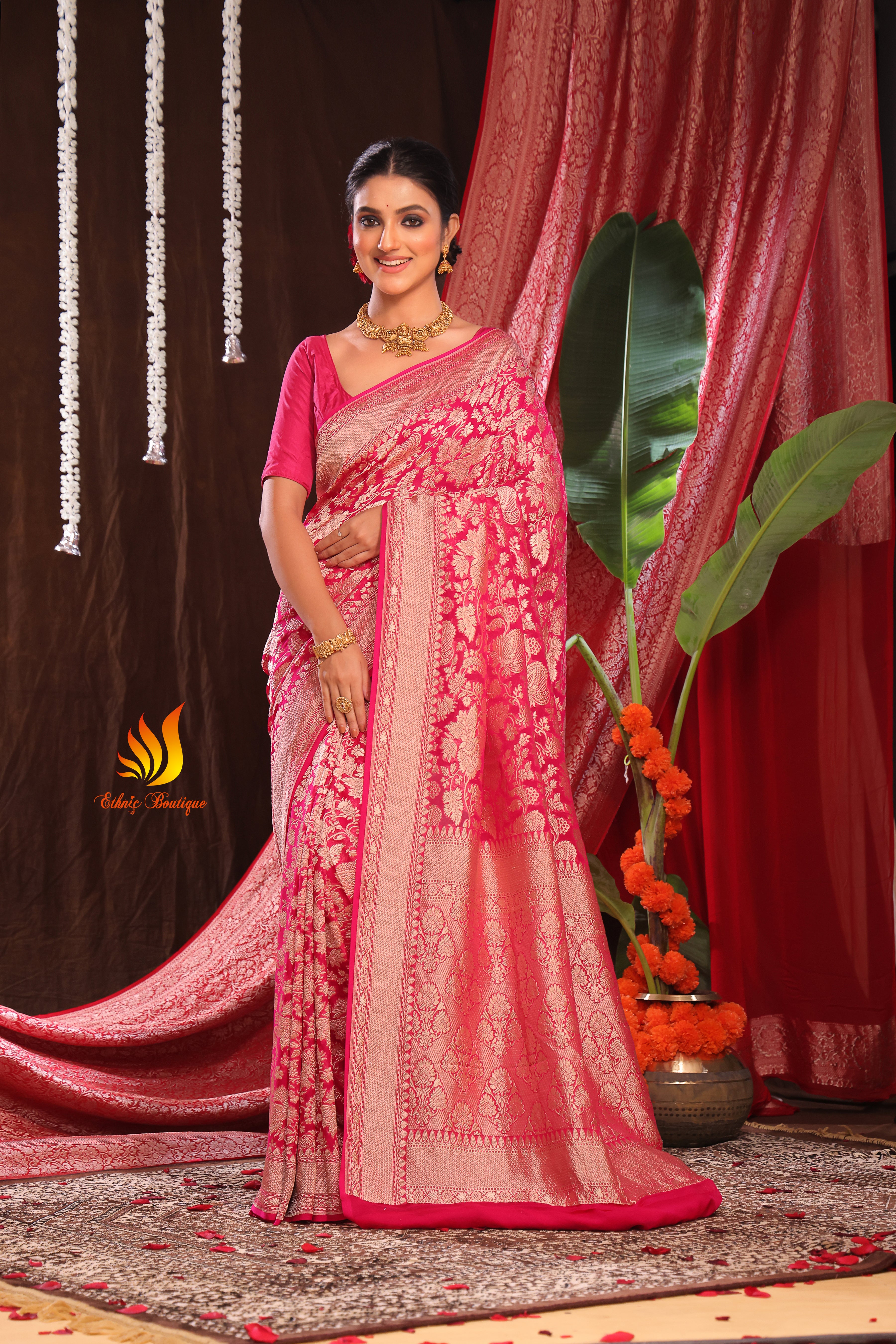
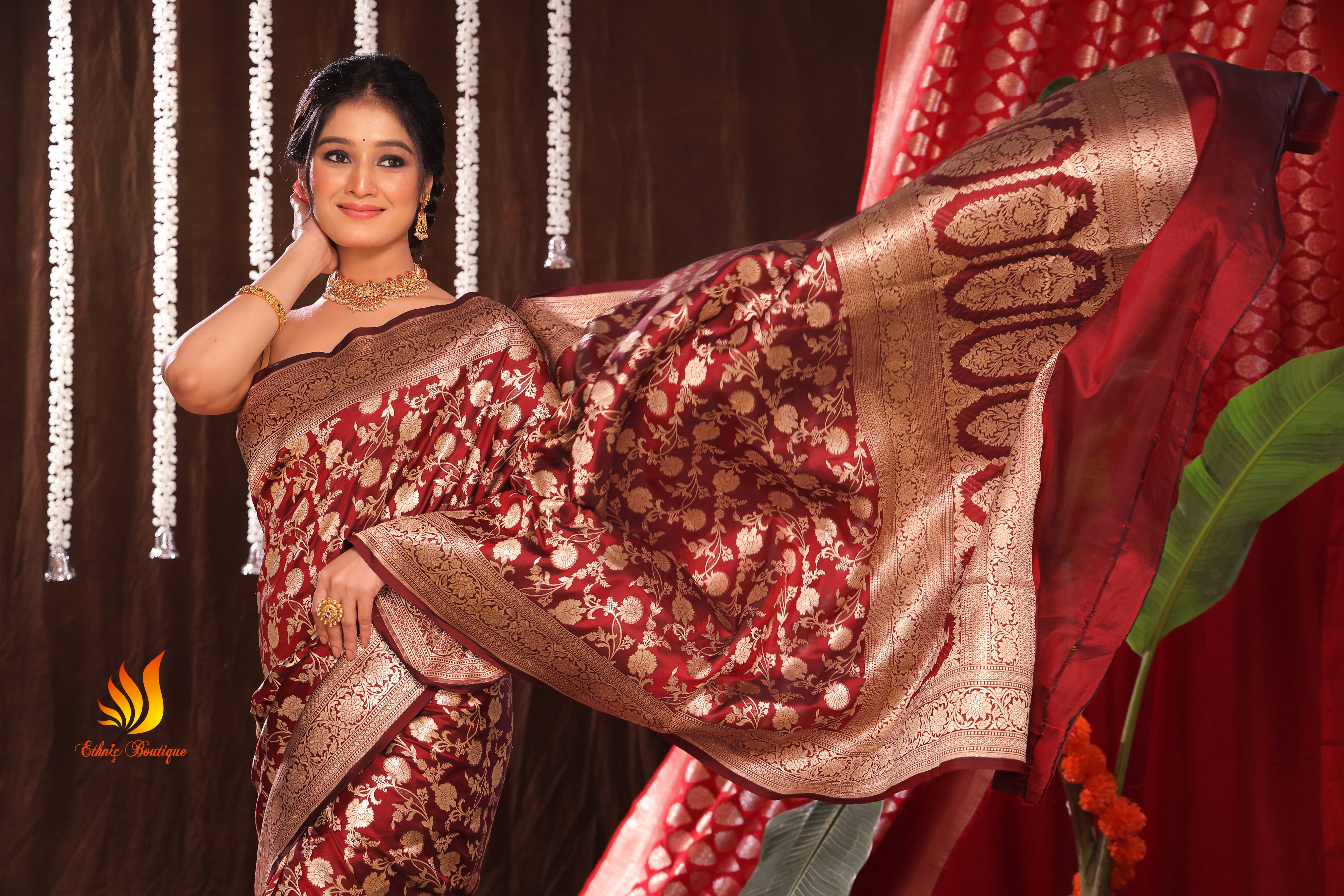
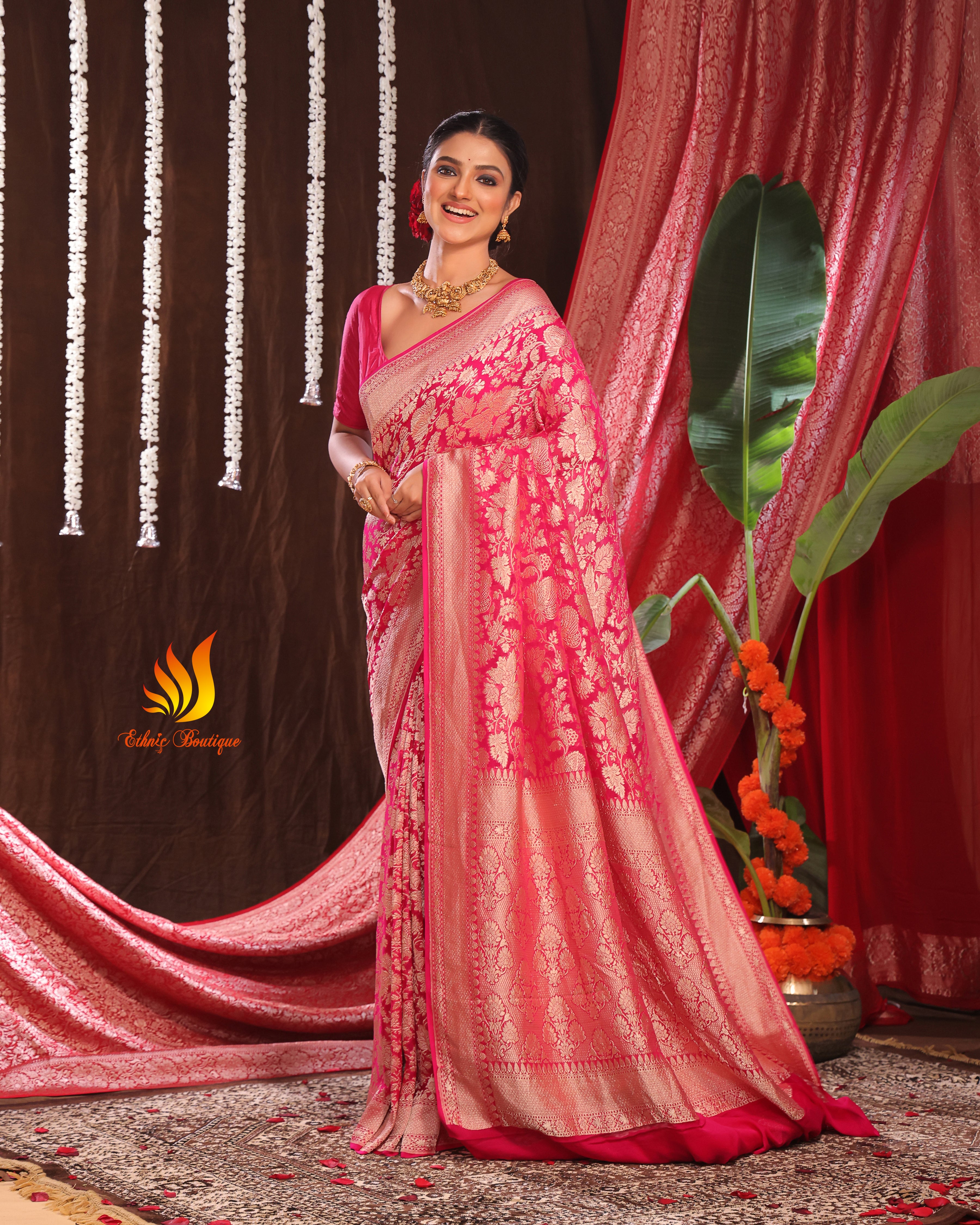
Here’s a comprehensive guide to Katan Banarasi Sarees — one of the most prized traditional silk sarees from India:
🧵 What Is a Katan Banarasi Saree?
A Katan Banarasi saree is a luxurious handwoven silk saree from Varanasi (Banaras), made using Katan silk as the base fabric and often enhanced with rich zari (metallic thread) work. These sarees are considered among the most elegant and classic choices for weddings, festivals, and ceremonial occasions. (Baranashe)
🧶 Fabric: Katan Silk
-
Katan silk refers to silk yarns where two silk threads are tightly twisted together before weaving, creating a fabric that is strong, smooth, lustrous, and durable. (Baranashe)
-
The silk comes primarily from mulberry silk (long, fine fibers) and is famed for its rich sheen and graceful drape. (Katan Banaras)
-
Traditionally pure silk, with the best-quality Katan silk carrying Silk Mark certification. (Katan Banaras)
🧵 Weaving & Craftsmanship
🎨 Handloom & Techniques
-
Katan Banarasi sarees are mostly handloom woven by skilled artisans in Banaras, preserving centuries-old craft techniques. (Baranashe)
-
The designs are often created using Kadwa (individual motif weaving) or Fekwa/Phekuwa (brocade cutwork) methods — both are labour-intensive and highly detailed. (Katan Banaras)
🪩 Zari Work
-
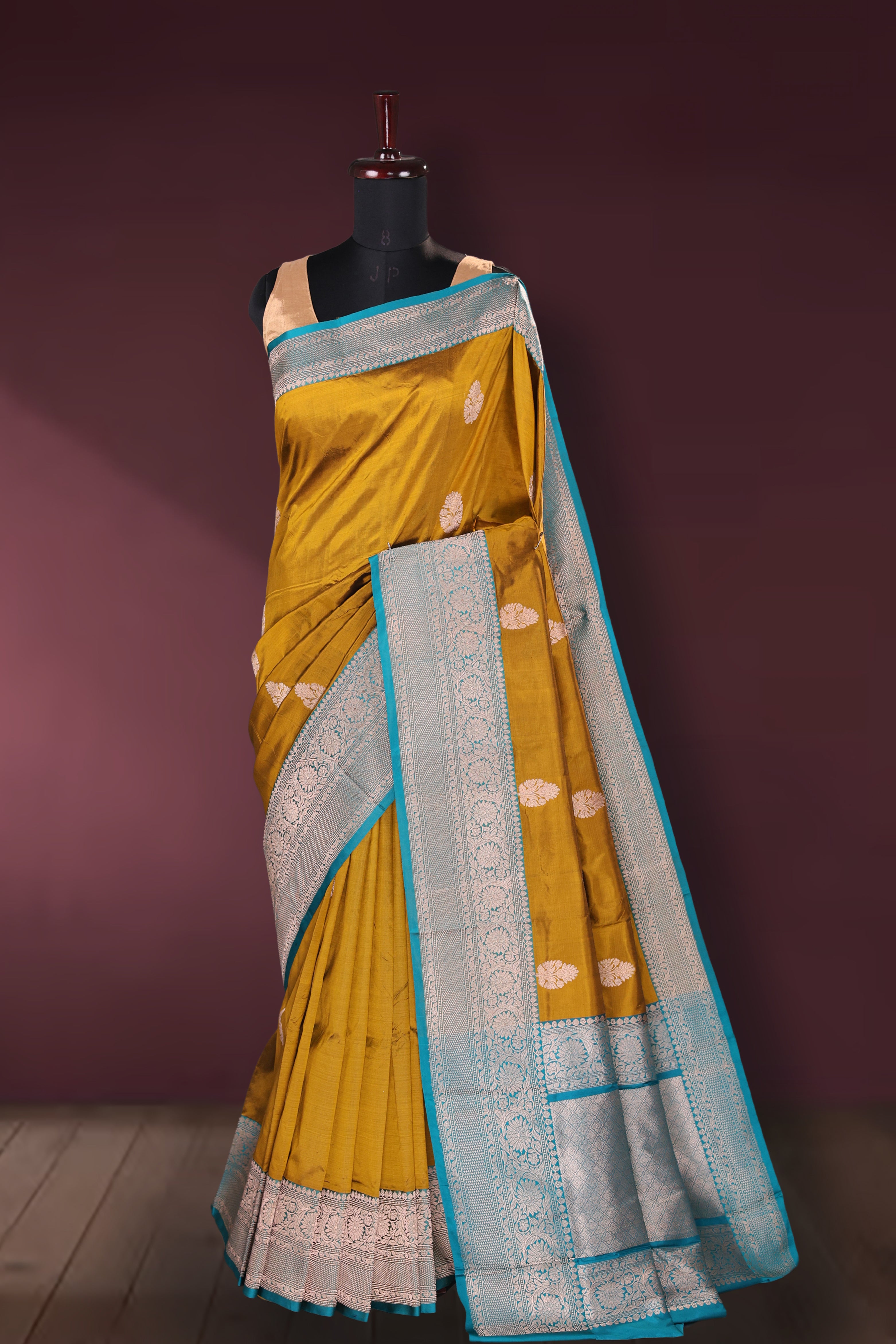
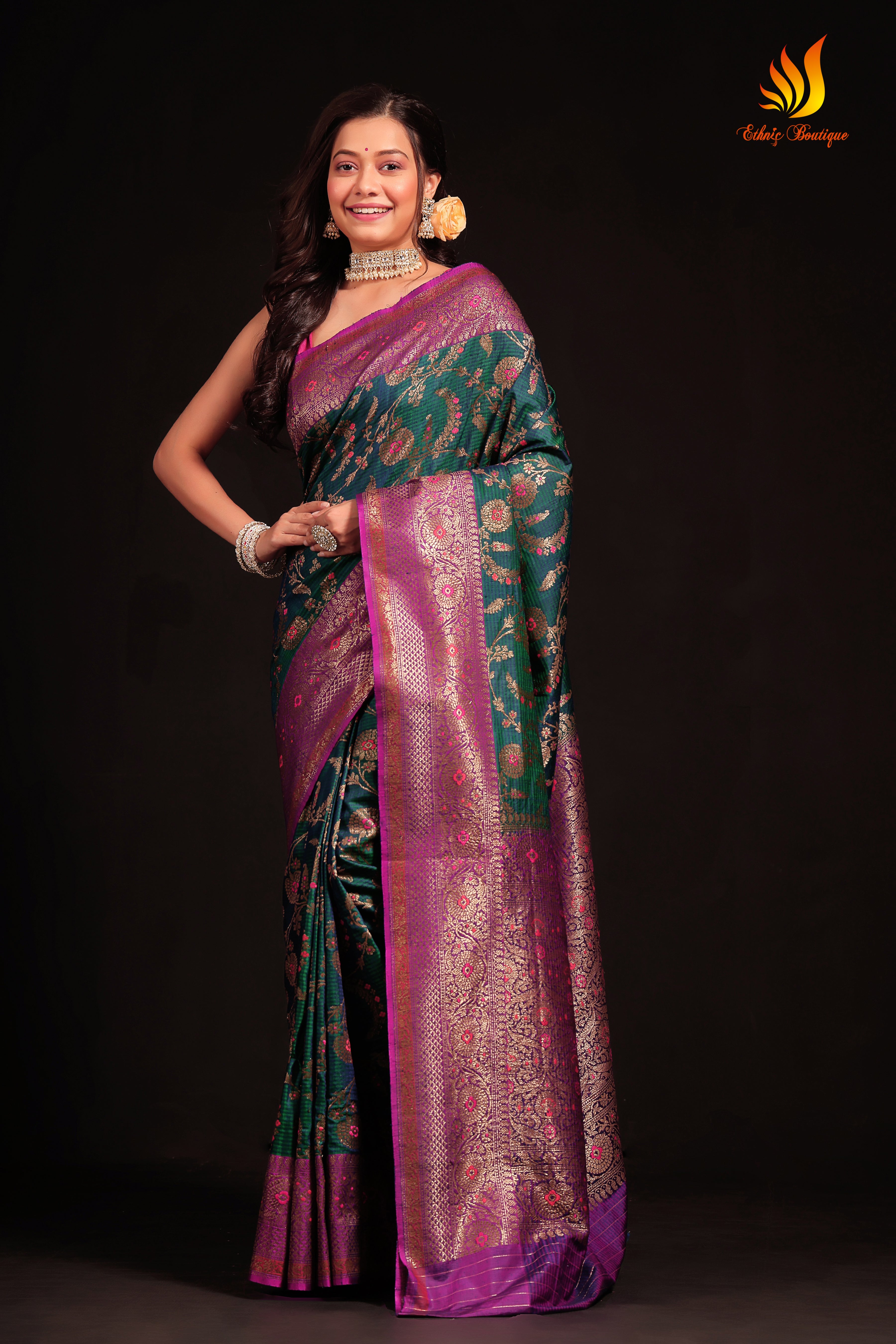
Zari (gold or silver metallic thread) is woven into patterns like buttas (small motifs), jaals (net-like patterns), floral vines, and traditional border designs. (Baranashe)
-
Authentic zari may be real gold/silver (especially in bridal or high-end pieces), or high-quality metallic threads — heavier and richer than printed or embroidered alternatives. (The Times of India)
🌟 Design & Appearance
Typical features of a Banarasi Katan saree:
-
Smooth, rich texture with natural silk sheen. (Baranashe)
-
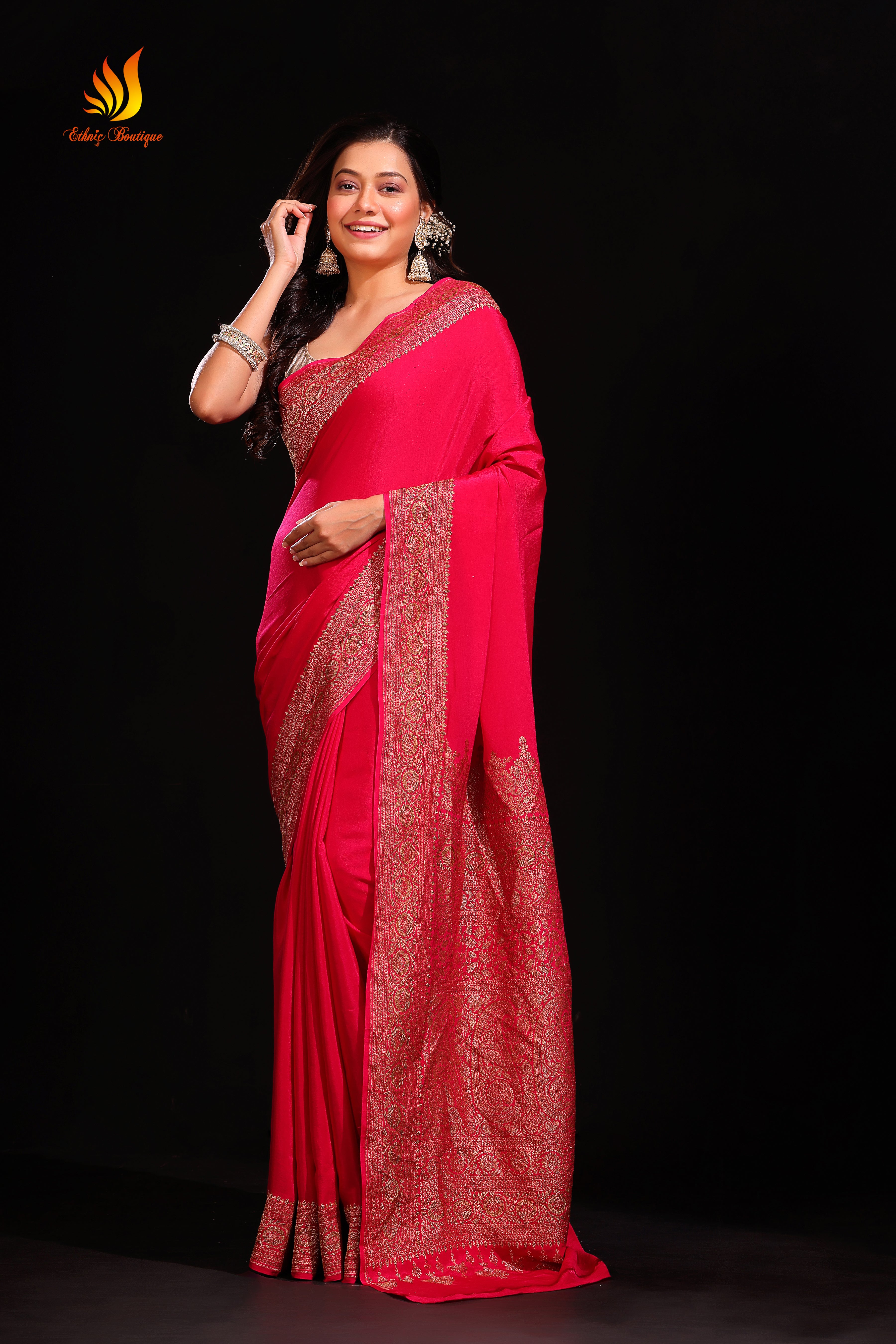
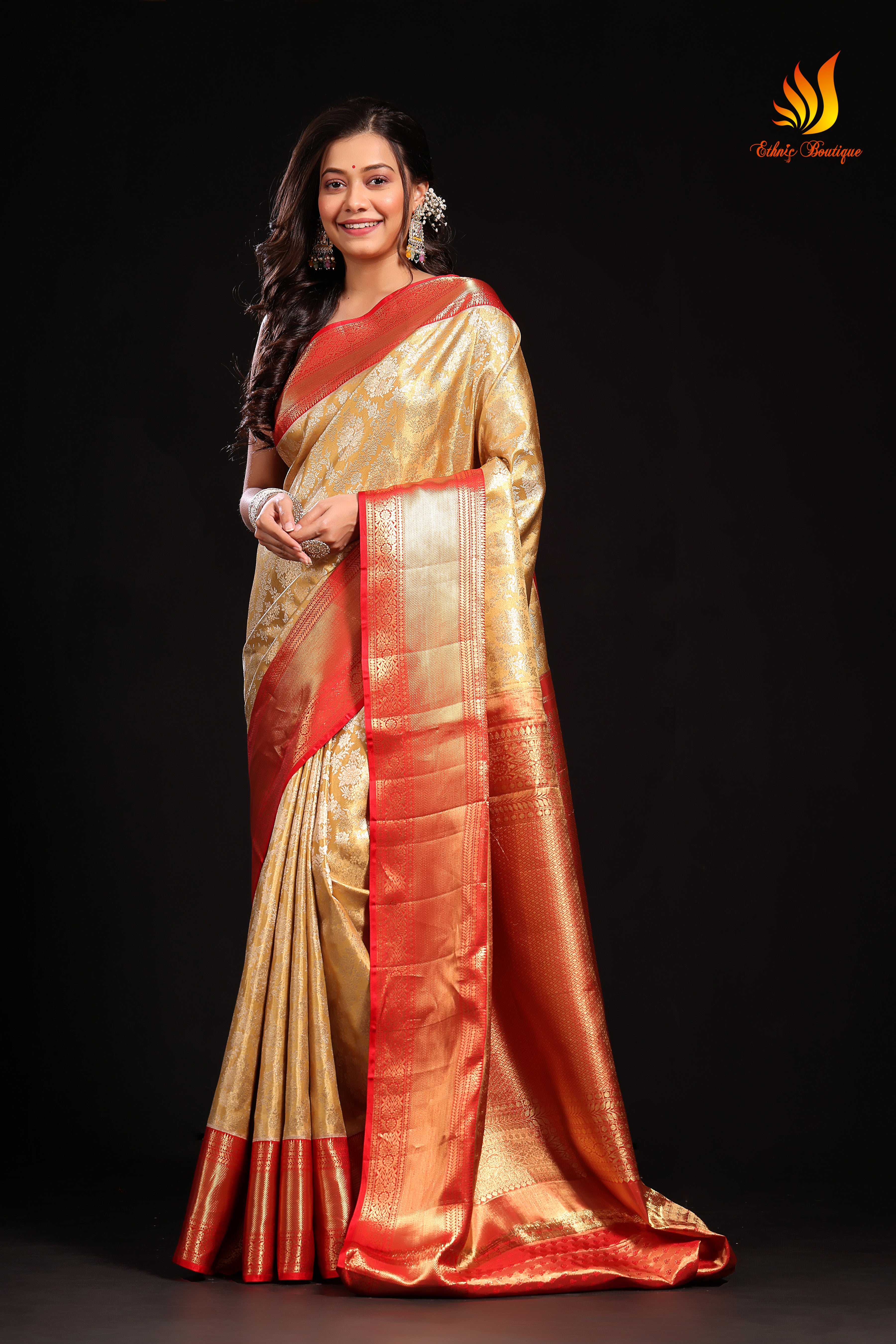
Intricate zari borders and pallus with motifs inspired by Mughal art — such as floral vines, paisleys, chand buta, or geometric jaals. (Baranashe)
-
Luxury appeal: Often heavier and more ornate than other Banarasi silk types due to dense brocade and elaborate borders. (Reddit)
-
Looks especially regal in rich colors like red, maroon, royal blue, black, and metallic highlights. (Banaras Kothi)
📆 History & Cultural Roots
-
Banarasi silk weaving traces its prominence back to the Mughal era, where Varanasi was a major center of textile luxury. Zari and silk weaving techniques evolved under royal patronage. (Katan Banaras)
-
Katan silk itself likely has influences from Persian textile traditions, adapted into the Banaras handloom craft over centuries. (banarasi.com)
🎯 Occasions to Wear
Katan Banarasi sarees are ideal for:
-
Weddings & bridal trousseau – classic choice for brides. (Katan Banaras)
-
Festivals & grand celebrations – Diwali, Durga Puja, Eid, cultural ceremonies. (Baranashe)
-
Formal events & receptions – exuding royal elegance and presence. (Baranashe)
🧴 Care & Maintenance Tips
-
Always dry clean to preserve silk quality and zari shine. (Katan Banaras)
-
Store wrapped in muslin or butter paper to protect from moisture and friction. (banarasi.com)
-
Untangle folds occasionally and avoid spraying perfume directly on zari. (banarasi.com)
💡 Authenticity & Buying Tips
To ensure you’re buying a genuine Katan Banarasi saree:
✔ Look for Silk Mark certification or lab-tested authenticity for pure silk. (Katan Banaras)
✔ Check the reverse side of zari work — handloom sarees typically show non-uniform threads (a sign of hand weaving). (The Times of India)
✔ Feel the weight & texture — pure Katan silk feels smooth, substantial, and has depth in sheen. (Reddit)
✔ Buy from reputable handloom houses and trusted Banarasi brands. (Reddit)
🏷️ Typical Price Range
Prices vary by silk purity, zari quality, and intricacy:
-
Entry to mid-range handloom: ₹10,000 – ₹30,000+
-
Premium & bridal quality: ₹30,000 – ₹1,00,000+
(Pure handloom and real zari drastically increase value compared to blended or machine-made versions.) (Reddit)